

Hey there! As a supplier of PHMG Biocide, I often get asked about how this amazing stuff works in high - salt environments. So, let's dive right into it.

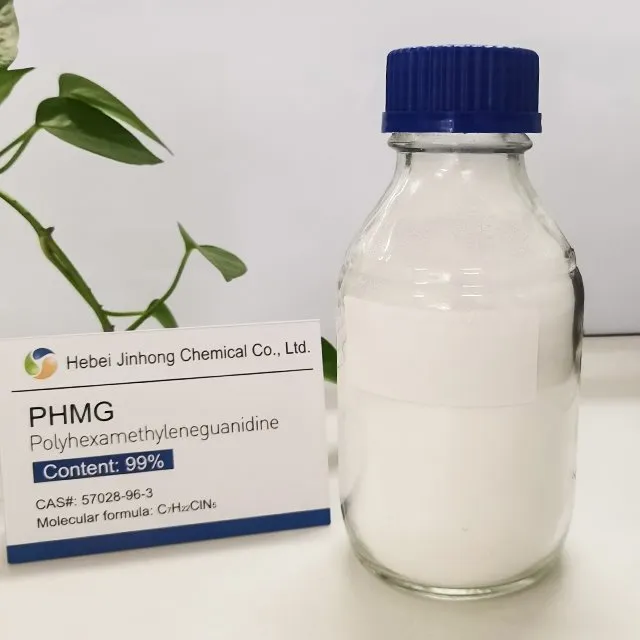
First off, what the heck is PHMG? Well, PHMG stands for Polyhexamethylene Guanidine. You can check out more about it here: Polyhexamethylene Guanidine CAS 57028 - 96 - 3. It's a super - effective biocide that's been used in a whole bunch of applications, from water treatment to surface disinfection.
Now, high - salt environments are a bit of a tricky situation. You see, salt can mess with the way a lot of biocides work. But PHMG is different. It has some unique properties that allow it to function even when there's a ton of salt around.
One of the key things about PHMG is its positive charge. The polyhexamethylene guanidine molecules have a positive charge on them. Bacteria and other microorganisms usually have a negative charge on their cell surfaces. This difference in charge creates an electrostatic attraction between the PHMG and the microorganisms. In a high - salt environment, although there are a lot of ions from the salt, the positive charge of PHMG is still strong enough to bind to the negatively - charged cell surfaces of the microbes.
Let's talk about the mechanism of action. Once the PHMG binds to the cell surface of the microorganism, it starts to disrupt the cell membrane. The cell membrane is like a protective barrier for the microbe. When PHMG attaches to it, it causes the membrane to become leaky. Small molecules and ions that the microbe needs to survive start to leak out, and harmful substances can leak in. This eventually leads to the death of the microorganism.
In high - salt environments, the presence of salt can sometimes interfere with the normal function of other biocides. For example, some biocides rely on specific chemical reactions that can be affected by the high concentration of salt ions. But PHMG's mode of action is mainly based on electrostatic interactions. The salt ions in the environment don't really disrupt these electrostatic forces between PHMG and the microbial cell surface.
Another important aspect is the stability of PHMG in high - salt conditions. PHMG is a relatively stable compound. It doesn't break down easily in the presence of salt. This is crucial because if a biocide breaks down quickly in a high - salt environment, it won't be able to do its job effectively.
You can also find PHMG CAS 57028 - 96 - 3 in different forms. One popular form is the Polyhexamethylene Guanidine 50% Solution CAS 57028 - 96 - 3. This solution is easy to use and can be adjusted according to the specific needs of the high - salt environment.
Now, let's look at some real - world applications. In the oil and gas industry, for example, there are a lot of high - salt water systems. These systems are prone to microbial growth, which can cause corrosion and other problems. PHMG can be used to control the microbial population in these systems. It can be added to the water at the right concentration, and it will start working to kill off the bacteria and other microbes.
In the food processing industry, high - salt brines are often used. Microbial contamination in these brines can lead to spoilage and food safety issues. PHMG can be used to disinfect these brines and keep the food products safe.
So, if you're dealing with a high - salt environment and need an effective biocide, PHMG is a great option. It's reliable, stable, and can get the job done.
If you're interested in purchasing PHMG Biocide for your high - salt environment applications, feel free to reach out and start a conversation. We're here to help you find the right solution for your specific needs.
References:
- Some scientific research on the properties and applications of PHMG in different environments.
- Industry reports on the use of biocides in high - salt systems.