

Hey there! As a supplier of antibacterial masterbatch, I'm super stoked to chat with you about the quality control measures we take during production. Antibacterial masterbatch is a game - changer in many industries, from appliances to fibers, and ensuring its quality is of utmost importance.
Let's start with raw material inspection. This is the very first step in our quality control process. We source our raw materials from trusted suppliers. Before we even start mixing them up, we conduct a series of tests. For example, we check the purity of the antibacterial agents. These agents are the heart of our masterbatch, and any impurities can affect its performance. We use advanced analytical techniques like high - performance liquid chromatography (HPLC) to measure the exact concentration and purity of these agents.
The base polymers also need to be in top - notch condition. We test their melt flow index (MFI), which tells us how easily the polymer can flow when melted. A consistent MFI is crucial because it affects the dispersion of the antibacterial agents in the masterbatch. If the MFI is off, the masterbatch might not mix well during the final application, leading to uneven antibacterial protection.
Once we've given the raw materials the all - clear, it's time for the mixing process. We use state - of - the - art mixing equipment. During mixing, we closely monitor the temperature and pressure. The temperature needs to be just right; too high, and the antibacterial agents might break down, losing their effectiveness. Too low, and the agents won't disperse properly in the base polymer.
We also keep a close eye on the mixing time. A proper mixing time ensures that the antibacterial agents are evenly distributed throughout the masterbatch. We use in - line sensors to continuously measure the properties of the mixture as it's being blended. These sensors can detect any variations in viscosity, temperature, or the concentration of the antibacterial agents. If there are any deviations from the set parameters, we can quickly make adjustments.
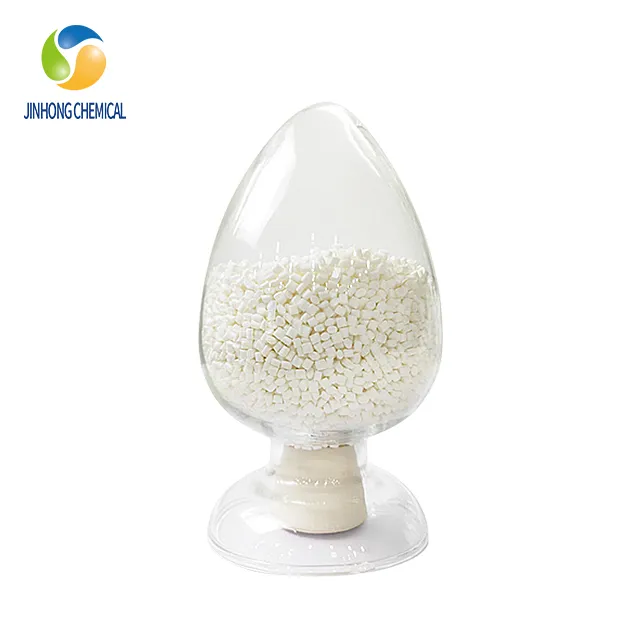
After the mixing is done, we move on to the pelletizing process. The masterbatch is turned into small pellets, which are easier to handle and use in various applications. During pelletizing, we check the size and shape of the pellets. Uniform pellet size is essential because it affects the feeding and melting process in the end - user's equipment. We use sieving machines to separate any pellets that are too large or too small.
Next up is the testing of the finished product. We conduct a battery of tests to ensure that the antibacterial masterbatch meets all the required standards. One of the most important tests is the antibacterial efficacy test. We expose the masterbatch to a variety of bacteria, such as E. coli and Staphylococcus aureus, and measure how well it inhibits their growth. We use standard testing methods like the JIS Z 2801 test, which is widely recognized in the industry.

We also test the physical properties of the masterbatch, such as its tensile strength and elongation at break. These properties are important because they determine how well the masterbatch will perform in different applications. For example, in Appliance Antibacterial Masterbatch, good physical properties ensure that the masterbatch can withstand the stresses and strains during the manufacturing and use of appliances.
In addition to these tests, we also perform stability tests. We expose the masterbatch to different environmental conditions, such as high temperature, humidity, and UV light, to see how it holds up over time. A stable masterbatch is essential because it ensures that the antibacterial properties remain effective throughout the product's lifespan.
Now, let's talk about documentation and traceability. We keep detailed records of every batch of antibacterial masterbatch we produce. This includes information about the raw materials used, the production process parameters, and the test results. This documentation is not only important for quality control but also for regulatory compliance. In case there are any issues with the product, we can quickly trace back to the source and take appropriate action.
We also have a quality management system in place that is certified to international standards, such as ISO 9001. This system helps us to continuously improve our quality control measures and ensure that we are meeting the highest industry standards.
When it comes to different types of antibacterial masterbatch, we have specific quality control measures for each. For PP Antibacterial Masterbatch, we pay special attention to the compatibility between the antibacterial agents and the polypropylene base polymer. PP has its own unique properties, and we need to make sure that the masterbatch doesn't cause any problems like discoloration or reduced mechanical properties.
For Antibacterial Fiber Masterbatch, we focus on the fineness and dispersion of the masterbatch. Fibers are very sensitive to any impurities or uneven dispersion, so we use special processing techniques to ensure that the masterbatch can be easily incorporated into the fiber - spinning process.
In conclusion, quality control is a multi - step process that starts from the raw materials and continues all the way to the finished product. We take every possible measure to ensure that our antibacterial masterbatch is of the highest quality. Whether you're in the appliance industry, plastics manufacturing, or the textile industry, our masterbatch can provide reliable antibacterial protection.
If you're interested in our antibacterial masterbatch and want to discuss your specific requirements, don't hesitate to reach out. We're always happy to have a chat and see how we can meet your needs.
References
- ASTM International. (Year). Standard test methods for various properties of polymers.
- Japanese Industrial Standards Committee. (Year). JIS Z 2801:2010 - Antibacterial products - Test for antibacterial activity and efficacy.